
Direct factory-sourced commercial, residential, and office container pods built to international building codes with complete turn-key customization options.
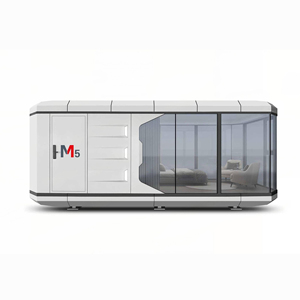 Resort & Glamping
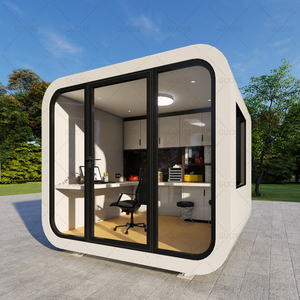 Garden & Office
 Commercial XL
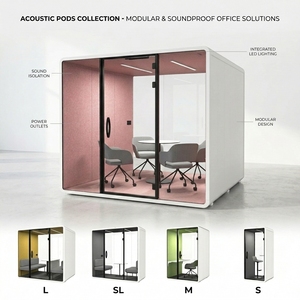
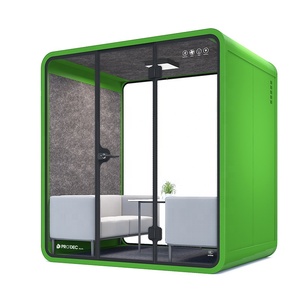 Acoustic Isolation
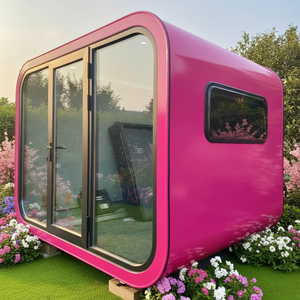 Heavy-Duty Steel
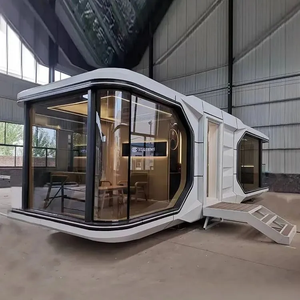 20ft / 40ft Modular
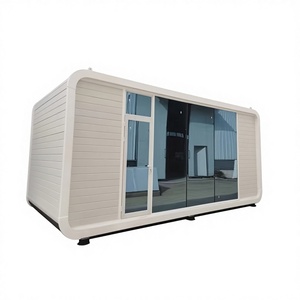 Movable Working Pod
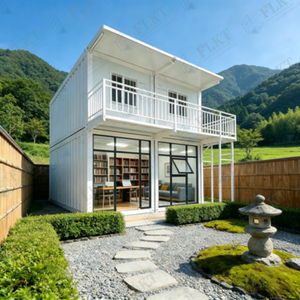 Expandable Design
An expert analysis of manufacturing clusters, material standards, and engineering innovations driving global modular construction leadership.
The global demand for off-site modular construction, eco-resort space capsules, outdoor office pods, and prefabricated accessory dwelling units (ADUs) has triggered a major paradigm shift in modern architecture. Global project developers, commercial property owners, hotel operators, and modular housing distributors increasingly look to China's industrial hubs—primarily located in Guangdong, Jiangsu, and Shandong provinces—to procure ultra-modern container pods that seamlessly blend structural endurance with luxury aesthetics.
China's container pod factories lead global innovation due to an integrated supply chain that encompasses advanced metallurgy, automated robotic welding, aerospace-grade aluminum extrusion, and automated thermal insulation bonding. By leveraging high-precision factory-controlled manufacturing, Chinese OEMs produce fully finished "plug-and-play" space pods, apple cabins, and expandable container houses at costs 40% to 60% lower than traditional on-site construction, while drastically cutting project delivery timelines from years to mere weeks.
Information Gain Key Insight: Unlike standard ISO shipping container modifications, Tier-1 Chinese container pod manufacturers now employ dedicated cold-formed galvanized steel profiles and aviation-grade aluminum shells (5052-H32 alloy). This structural shift eliminates thermal bridging issues, prevents condensation buildup, and improves acoustic attenuation values to RW 38dB+ without adding unnecessary structural dead weight.
When sourcing container pods from China, corporate procurement leads must look beyond initial unit pricing. The overall value equation relies heavily on structural framing integrity, insulation performance metrics ($R$-value/$U$-value), glass curtain wall specs (double/triple-pane toughened Low-E glass), electrical system approvals (CE, UL, SAA, CSA), and long-distance ocean shipping compatibility.
Evaluating structural profiles, thermal envelope performance, and primary operational applications across core prefabricated container pod architectures.
| Pod Category | Primary Frame & Shell | Thermal Insulation | Acoustic Isolation | Wind/Seismic Rating | Primary Best-Use Case |
|---|---|---|---|---|---|
| Futuristic Space Capsule | Fluorocarbon Aluminum Shell + Galvanized Frame | 100mm Polyurethane (PU) Injected Foam | 38 dB - 42 dB (Double Low-E Glass) | Level 12 Typhoon / Zone 8 Seismic | Glamping Resorts, Eco-Hotels, Scenic Villas |
| Apple Cabin Office Pod | Galvanized Steel Frame + Aluminum Composite Panel | 75mm High-Density Rockwool / EPS Panel | 35 dB - 40 dB (Laminated Tempered) | Level 11 Typhoon / Zone 7 Seismic | Commercial Backyards, Co-Working, Meeting Hubs |
| Acoustic Work Capsule | Electro-Galvanized Steel + Internal Acoustic Felt | Multi-layer Polyester Fiber Sound Absorption | 42 dB - 48 dB (Acoustic Glass Wall) | Indoor / Covered Semi-Outdoor | Corporate Executive Offices, Libraries, Hotels |
| Expandable Container Pod | Heavy-Duty Corten / Galvanized Steel Structure | 50mm - 100mm PU/Rockwool Sandwich Panel | 30 dB - 35 dB (Standard Tempered) | Level 10 Typhoon / Zone 7 Seismic | Disaster Relief, Remote Living, Large ADUs |
Enterprise-grade engineering guarantees high structural safety, weatherproofing, and comfort across extreme climates worldwide.
Utilizing fluorocarbon spray-coated aviation aluminum and hot-dip galvanized structural steel chassis prevents rust formation even in high-salinity coastal resorts or humidity-heavy tropical environments.
Pods are pre-wired during factory assembly with regional electrical standards (UL for USA, CE for Europe, SAA for Australia). Integrated plumbing features hidden PEX water lines and waste collection systems.
Equipped with double-glazed hollow Low-E toughened glass, soundproof damping felts, and acoustic honeycomb panels, providing high noise reduction for high-focus working environments.
High-density Polyurethane (PU) pressure-injected insulation layers guarantee zero thermal gaps, reducing heating and cooling power consumption by over 45% compared to standard modular cabins.
90% of interior fit-out—including smart lighting, air conditioning, motorized skylights, sanitary fixtures, and integrated furniture—is completed under strict factory quality control before dispatch.
Pods are specifically dimensioned to fit standardized 40ft High Cube container shipping or flat-rack (FR) ocean transport, enabling global delivery to any deep-water port or remote site.
Strategic developments shaping the next decade of prefabricated modular architecture and international commercial sourcing.
As the international real estate and hospitality markets navigate rising on-site labor costs and stringent environmental regulations, the prefabricated container pod sector is experiencing rapid technology-driven evolution. Sourcing directors should align their long-term supply chain strategies with these major industry trends:
Next-generation space capsule pods and apple cabins are increasingly engineered for total energy independence. Manufacturers now incorporate flexible CIGS (Copper Indium Gallium Selenide) solar films directly onto curved roof structures, paired with lithium-iron-phosphate (LiFePO4) energy storage banks and greywater filtration systems. This enables resort operators to deploy luxury accommodation pods in ecologically sensitive alpine, desert, or island locations without laying heavy utility grid infrastructure.
Modern commercial meeting pods and residential capsules are shifting from basic mechanical switches to IoT-enabled smart hubs. Integrated AI management systems dynamically balance fresh air ventilation based on internal $CO_2$ sensors, adjust tint levels on electrochromic smart glass, and optimize heat pump operation according to occupancy schedules—drastically improving energy efficiency and user comfort.
Leading Chinese exporters are heavily investing in pre-certification programs across international jurisdictions. By securing structural engineering stamps for US International Building Codes (IBC/IRC), Australian National Construction Codes (NCC), and European CE EN 1090 structural steel execution standards, Tier-1 factories allow international buyers to dramatically accelerate local municipality permit approvals.
Four-stage inspection framework for commercial buyers verifying manufacturing integrity in Chinese container pod factories.
Verify mill test certificates (MTC) for structural steel profiles (Q235B/Q355B grades). Confirm exterior aluminum cladding uses 5052-H32 aircraft-grade alloy with fluorocarbon (PVDF) coating thickness exceeding 25 microns for UV resilience.
Ensure full-penetration robotic welding across all primary frame corner joints. Demand non-destructive testing (NDT) reports or ultrasonic weld flaw detection for heavy load-bearing points intended for crane hoisting.
Require a 24-hour continuous high-pressure water deluge spray test (mimicking typhoon rain conditions) prior to interior wall lining. Inspect thermal insulation density ($>40kg/m^3$ for PU foam) to ensure zero thermal bridging.
Conduct dielectric voltage-withstand testing, grounding continuity checks, and 100% full-load circuit operation tests for all integrated HVAC systems, ambient LED tracks, and smart appliance suites.
Direct technical and operational answers to common B2B container pod manufacturing and import queries.
Request detailed architectural specifications, full B2B factory pricing catalogs, and custom OEM/ODM manufacturing feasibility consultations for your upcoming resort or commercial project.