
Custom-built container homes, mobile luxury space capsules, and fast-assembly site accommodations certified for tropical climate resilience across Bangladesh.
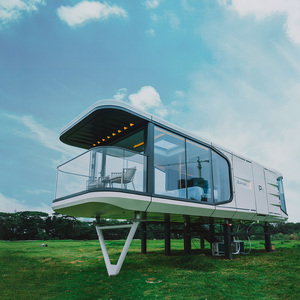
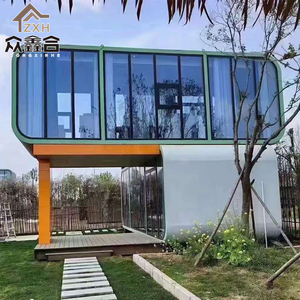
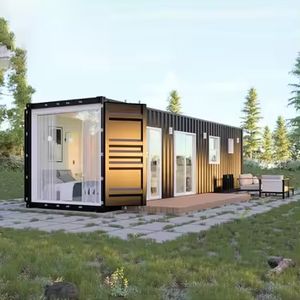
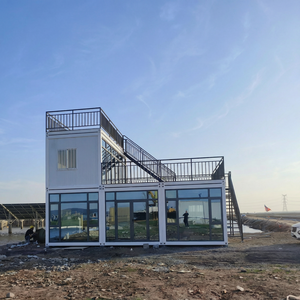
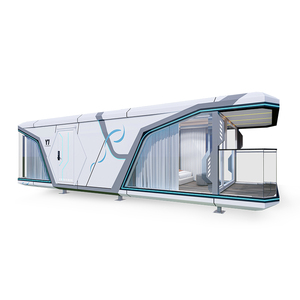
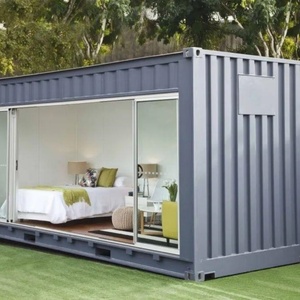
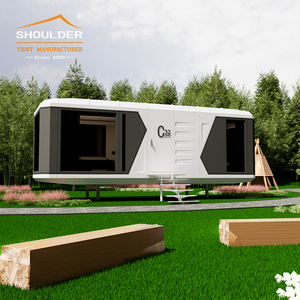
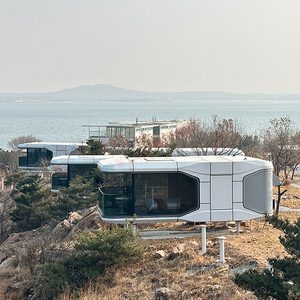
From dense urban epicenters like Dhaka and Chittagong to challenging deltaic coastal zones, modular container housing provides resilient infrastructure tailored to Bangladesh’s unique geographical and economic landscape.
Bangladesh’s thriving Ready-Made Garment (RMG) sector in Gazipur, Savar, and Narayanganj demands rapid expansion of compliant worker housing and administration hubs. Our 20ft and 40ft modular container units deliver fire-rated (Class A), thermally insulated, multi-story dormitory complexes that can be deployed in weeks to meet stringent Accord/Alliance international buyer compliance standards.
The booming hospitality sectors in Saint Martin’s Island, Cox's Bazar, and the tea estates of Sreemangal require low-impact, eco-friendly luxury structures. Our futuristic Zcamp Space Capsules and glass-front Apple Cabins provide zero-land-scarring luxury accommodations that withstand heavy monsoon rainfall and saltwater air corrosion without requiring permanent concrete destruction of natural flora.
For mega infrastructure ventures such as the Matarbari Deep Sea Port, Karnaphuli Tunnel, and Bangabandhu Hi-Tech City, our flat-pack and modified container houses offer durable engineers' quarters, laboratory spaces, and command centers that can be dismounted, relocated, and reassembled across sequential project phases.
Due to high land prices in Dhaka (Gulshan, Banani, Dhanmondi) and Chittagong (GEC, Agrabad), building owners are turning to rooftop retrofitting. Utilizing structural lightweight aluminum and CORTEN frame capsule cabins, developers add lucrative rooftop cafes, boutique offices, or modern residential ADUs without exceeding building dead-load thresholds specified by RAJUK.
In low-lying riverine chars and cyclone-prone districts like Satkhira, Bhola, and Patuakhali, traditional housing gets swept away by annual tidal surges. Our elevated steel container structures, anchored on steel screw piles, survive severe inundation while maintaining hermetic insulation against humid coastal conditions.
Remote community development initiatives funded by international NGOs and government bodies in the Chittagong Hill Tracts (Rangamati, Bandarban) leverage solar-powered container clinic kits equipped with thermal-insulated walls, cleanroom panels, and energy-efficient cooling.
Direct engineering comparison showing how our exported container home specifications mitigate Bangladesh’s extreme sub-tropical humidity, high salinity coastal environments, and intense solar radiation.
| Climate Challenge | Traditional Build Vulnerability | Our Factory Container Engineering Spec | Quantifiable Performance Margin |
|---|---|---|---|
| Monsoon Moisture & Dampness | Brick capillary seepage, internal mold growth, plaster flaking within 12 months. | Hydrophobic high-density Polyurethane (PU/PIR) foam insulation core + vapor barrier lining. | 0% moisture absorption; internal RH maintained below 55% with standard HVAC. |
| Bay of Bengal Cyclones | Roof tile displacement, structural wall collapse at wind speeds > 140 km/h. | Fully welded SPA-H CORTEN steel frame with high tensile interlocking corner castings. | Engineered to resist category 5 wind loads up to 260 km/h (BNBC 2020 Zone 4 compliant). |
| Coastal Saline Air (Chittagong) | Rapid oxidation of standard rebar steel and iron roofing within 3 years. | 4-Layer Protective System: Epoxy zinc-rich primer + Polyurethane finish coat (120μm thickness). | Passes 2,000-hour neutral salt spray test (ASTM B117); 25+ year anti-rust rating. |
| Extreme Summer Heat (38°C+) | High concrete thermal mass traps indoor heat, drastically driving up AC power bills. | 50mm-100mm PU/PIR Sandwich panel with thermal break structural separation. | Thermal Conductivity (K-value) ≤ 0.022 W/m·K; reduces cooling power consumption by 45%. |
| Seismic Zone 3 Activity | Brittle fracture of unreinforced masonry walls during tectonic shifts. | Ductile, high-elasticity steel volumetric container cell structure. | Resists up to Richter Scale 8.0 earthquakes; dynamic load absorbing frame. |
Key socio-economic factors, environmental mandates, and regulatory updates pushing developers away from traditional brick kilns toward off-site prefabrication.
The implementation of the updated Bangladesh National Building Code (BNBC 2020) places stringent guidelines on structural safety, energy efficiency, and environmental impact. The Bangladesh Department of Environment (DoE) has legislated a progressive phase-out of traditional topsoil red-brick burning to protect agricultural lands. Modular steel container structures provide a 100% green, recyclable alternative that fulfills national sustainability targets.
With volatile prices for cement, rebar steel, and coarse sand in the local Bangladeshi market, conventional construction projects suffer from severe budget overruns and multi-year delays. Our factory-made container homes are exported as turnkey products at fixed FOB/CIF prices, shrinking construction timelines from 14 months down to 30 days and allowing resort operators and businesses to generate revenue almost immediately.
Domestic tourism in Bangladesh has experienced exponential growth, with travelers seeking high-end glamping experiences in Sylhet, Bandarban, Sajek Valley, and Kuakata. Investors are adopting modular apple cabins and luxury space capsules because they can be easily transported over narrow hill tracts or via river barges without establishing heavy concrete mixing sites in pristine ecological zones.
We streamline the entire export-import chain from our manufacturing facility straight to Chittagong Port (Chattogram) or Mongla Port, ensuring smooth Customs Clearance under National Board of Revenue (NBR) regulations.
Our engineering team works with your local architects or site engineers to customize floor plans, MEP (Mechanical, Electrical, Plumbing) routing matching Bangladesh 230V/50Hz standards, and exterior aesthetic finishes. Full 3D BIM models and structural calculation sheets are provided for local authority approval.
We accept Irrevocable Commercial Letters of Credit (L/C at Sight). Manufacturing takes place in our ISO-certified automated production line using laser cutting, robot welding, and environmental spray booths, completing fabrication within 15–25 business days.
Units are shipped as standard SOC (Shipper Owned Container) or packed securely into 40ft HQ dry vans. Upon arrival at Chittagong Port, offloading is handled smoothly. We provide video installation guides and can dispatch on-site assembly technicians to oversee final foundation placement anywhere in Bangladesh.
As a top-tier manufacturer with over 50,000 square meters of specialized production space, we supply high-volume modular housing contracts globally with rigorous quality assurance.
Every unit undergoes strict structural stress analysis, air tightness testing, and simulated rainstorm leak assessments before leaving our factory floor. Our structures meet international building standards including CE, ISO9001, ISO14001, and UL electrical compliance.
By producing our own sandwich panels, heavy steel chassis frames, and double-glazed window assemblies in-house, we eliminate middleman markups and guarantee strict quality control over every structural beam, screw, and insulation core exported to Bangladesh.
Our dedicated South Asia export division understands local Bangladesh customs codes (HS Codes 9406.90.00 for Prefabricated Buildings), tax structures, and freight transit times, providing seamless customer support from initial architectural drafting to final key handover.
Essential answers for real estate developers, resort owners, construction firms, and private buyers importing container homes into Bangladesh.
Consult with our engineering team for instant design drawings, precise CIF Chittagong cost estimations, and structural customization for your project.
Contact Us