
High-efficiency, thermal-insulated, and structurally reinforced foldable container systems engineered specifically for Caucasian climatic conditions and rapid field assembly.
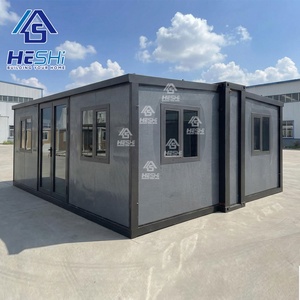
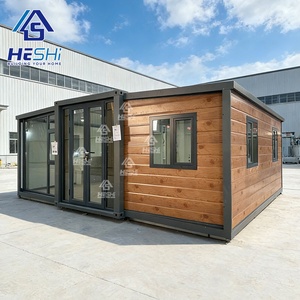
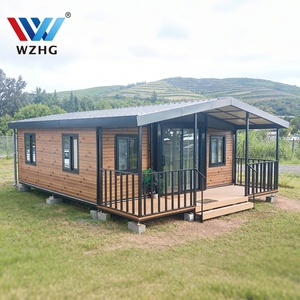
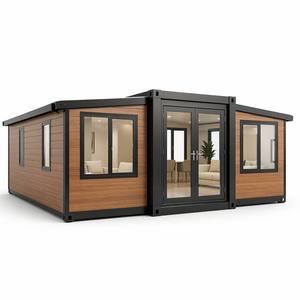
An in-depth analysis of structural engineering requirements, Trans-Caspian logistics efficiency, and local procurement dynamics governing expandable container deployment.
Azerbaijan stands at the strategic nexus of the Middle Corridor (Trans-Caspian International Transport Route). With massive capital investment directed toward the grand reconstruction of Karabakh and Eastern Zangezur, alongside the continuous modernization of oil and natural gas field infrastructure near Baku and Sangachal, traditional stick-built construction timelines present a distinct operational bottleneck.
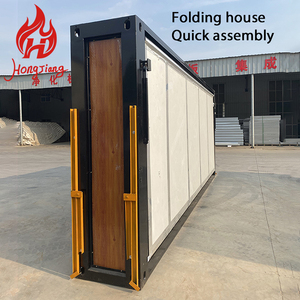
Expandable container structures address this challenge by decoupling site preparation from structural manufacturing. Produced in centralized automated facilities, these containers fold down into standard 20-foot and 40-foot ISO dimensions. This allows cost-effective sea and rail shipping via the Port of Baku (Alat Free Economic Zone), reducing site installation periods from months to mere hours.
Deploying prefabricated structures in Azerbaijan requires strict engineering adaptations due to severe regional microclimates. The Absheron Peninsula experiences aggressive marine salinity combined with the notorious "Khazri" wind—north winds reaching velocities up to 120 km/h. Conversely, mountainous regions like Shahdag and Caucasus highlands experience sub-zero winter temperatures and heavy snow loads.
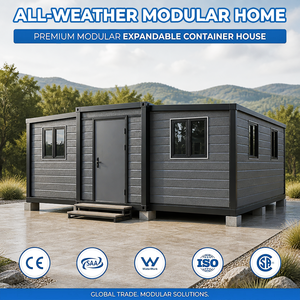
Our exported expandable container homes feature anti-corrosive C3/C4 rated zinc-galvanized Corten steel framing (minimum 2.5mm profile thickness) and high-density polyurethane (PU) or rockwool sandwich core panels. This structural synthesis guarantees thermal insulation integrity across ambient spans ranging from -20°C in winter highlands to +45°C in central semi-arid lowlands.
Tailored structural configurations designed to meet specific industrial, commercial, and municipal development priorities in key economic regions.
Deployable near Baku, Sangachal terminal, and Caspian coastal zones. Used as modular worker dormitories, site offices, and secure engineering headquarters equipped with salt-air resistant coatings and heavy insulation.
Ideal for rapid civil infrastructure restoration in Shusha, Aghdam, and Fuzuli. Expandable units supply high-density accommodation, mobile clinics, and command stations that move alongside road and rail paving operations.
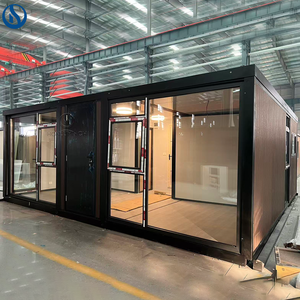
Designed for mountain retreats in Shahdag, Gabala, and Caspian shorelines. Fully customizable expandable villas feature architectural floor-to-ceiling glass paneling, luxury bath suites, and minimal ecological ground impact.
Servicing the agricultural heartlands of the Aran economic zone. Provides climate-controlled administrative centers, seasonal workforce housing, and field laboratory containers for farming conglomerates.
Essential emergency relief infrastructure for government and municipal defense bodies. Foldable containers expand in 15 minutes to establish triage centers, emergency shelters, and communication hubs during natural events.
A data-driven structural evaluation comparing key performance metrics of expandable modular systems against traditional masonry and basic flat-pack alternatives.
| Structural Parameter | Export Expandable Container | Standard Flat-Pack Container | Traditional Brick/Concrete |
|---|---|---|---|
| On-Site Assembly Time | 15 to 30 Minutes (2 Persons) | 4 to 6 Hours (3-4 Persons) | 4 to 9 Months (Full Crew) |
| Transport Logistics Ratio | 1 Container = 3x Floor Space | 1 Container = 1x Floor Space | High Raw Material Freight Costs |
| Wind Load Resistance | Up to 120 km/h (Baku Khazri Spec) | Up to 90 km/h | High (Depends on Foundation) |
| Seismic Qualification | Richter 8.0 (Flexible Steel Frame) | Richter 7.0 | Requires Rigid Concrete Footings |
| Thermal Insulation Envelope | R-24 PIR/PU Core (75mm-100mm) | R-11 EPS Core (50mm) | Requires External EIFS Coating |
| Corrosion Protection | C3/C4 Hot-Dip Zinc Galvanized | Basic Primer Paint Coating | Non-Metallic (Prone to Weathering) |
| Relocation Capability | 100% Re-foldable & Re-usable | Limited Dismantling Cycles | Permanent (Zero Relocation) |
Integrating world-class automated fabrication, rigid quality assurance, and end-to-end Trans-Caspian export management.
Our manufacturing hubs utilize automated laser cutting, robotic welding, and cold-roll steel forming machines to ensure millimeter-level assembly tolerances. Every exported expandable container holds international CE certification, ISO 9001 manufacturing authorization, and EN 1090 structural steel rating, satisfying Azerbaijani technical inspection benchmarks.
To combat the aggressive salt spray environments surrounding Baku and the Caspian basin, our structural steel frameworks undergo multi-stage surface treatments: sandblasting to SA 2.5 standards, hot-dip zinc galvanization (minimum 120g/m²), followed by fluorocarbon or marine-grade polyurethane topcoats for 25+ years of maintenance-free service life.
Exporting to Azerbaijan requires experienced multimodal logistics planning. We manage direct rail and sea freight routes via the Trans-Caspian corridor into Baku International Sea Trade Port at Alat. Containers arrive packaged in unified ISO dimensions, dramatically slashing ocean freight overheads and simplifying customs clearance.
Our expandable models feature factory-installed electrical wiring (CE/CB standard), pre-plumbed sanitary systems, sliding PVC/aluminum window suites, fire-rated MGO floor substrates, and integrated kitchen units. Upon arrival in Azerbaijan, structures require only unfolding, connection to local utilities, and immediate occupancy.
Direct answers addressing technical specifications, customs compliance, logistics pipelines, and field deployment across Azerbaijan.
Our structures feature reinforced structural Corten steel corners, dual-locking side-wing hinges, and high-tensile ground anchoring brackets. The entire structure is aerodynamic and rated to withstand wind loads up to 120 km/h, fully conforming to Absheron peninsula coastal safety codes.
We supply a complete export documentation bundle including Commercial Invoice, Packing List, Bill of Lading, Certificate of Origin (Form A/CO), ISO 9001/CE Quality Certificates, and detailed structural blueprints formatted for submission to the State Customs Committee of Azerbaijan.
Expandable containers require minimal civil foundation work. They can be placed on compacted gravel beds, concrete strip foundations, or 6 to 8 point concrete foundation blocks. This makes them exceptionally suited for rapid installation in Karabakh construction zones.
Yes. For mountainous or low-temperature regions, we fit the envelope with 75mm or 100mm high-density Polyisocyanurate (PIR) or Rockwool cores, combined with double-glazed Argon-filled thermal breaks, maintaining warm internal temperatures down to -20°C ambient outdoor conditions.
Because of our fold-out structural design, one standard 40ft High Cube (HC) shipping container can carry two complete 20ft expandable container houses. Alternatively, a single 40ft expandable container travels as its own standardized ISO shipping package.
Factory manufacturing takes 15 to 20 days depending on custom specifications. Multimodal transit via rail and sea along the Middle Corridor into the Port of Baku (Alat) typically averages 18 to 25 days, allowing total delivery within 35 to 45 calendar days.
Connect with our senior engineering team to receive detailed technical drawings, custom CAD layouts, thermal performance calculations, and competitive FOB/CIF Baku pricing for your project.